
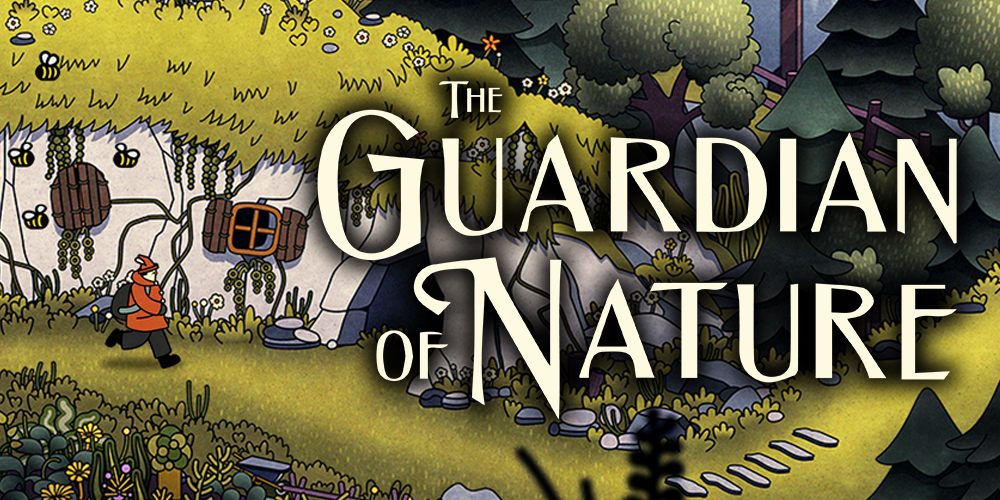
Inlusio Interactive’s The Guardian of Nature invites players into a lush, solarpunk-inspired world. Its point-and-click gameplay and eco-focused puzzles offer the potential for a refreshing change of pace. While the premise promises engaging challenges, the true test lies in whether its gameplay can stand tall like a redwood, or if it’s susceptible to the rot of mediocrity.
Alone Amongst the Land
In The Guardian of Nature, players step into the role of Henry, a lone Guardian tasked with protecting his idyllic island home. The island, centered around the towering MotherTree, is a living ecosystem interconnected by a network of mycelium. As a Guardian, Henry can alter his size to navigate the diverse terrain and interact with the island’s inhabitants, both plant and animal. But a looming threat forces him to embark on a perilous journey to safeguard his beloved home.

The demo offers a glimpse of the looming threat, but the rest is left in mystery. However, its influence is felt as the conductive wire-like mycelium has short circuited, leaving Henry to investigate the cause.
The Guardian of Nature offers an interesting sort of set piece that gives the player a sense of history but nothing concrete. I found myself asking questions about how guardians protect the land, as throughout the demo you don’t help the ecosystem in any impactful way. It’s possible that I’m thinking too much into the nuance of the story presented, but it’s hard not to let your mind wander when the land is uneventful.
Watching Grass Grow
A captivating demo should leave players eager to learn more. Unfortunately, The Guardian of Nature falls short. The concept of Guardians connected to the island’s flora and fauna offers intriguing possibilities for unique interactions. However, the demo feels lifeless, with indifferent animals and a limited use for the mycelium power system. While the intro hints at the mycelium’s role as a warning system, the gameplay primarily focuses on mundane puzzles. The Guardian’s ability to change size, a potentially powerful tool, is underutilized, sidelined as a visual effect to explore small caves. These missed opportunities could have led to more engaging and dynamic experiences.
The puzzles in the demo aren’t hard to say the least, but I did find myself stuck on the last puzzle. It’s clear that this mycelium powered paddle boat requires a charged battery and that the Guiro Frog had something to do with the actual frog taking up the boat’s space. After fruitless exploration, I resorted to a YouTube guide to discover a hidden path beyond the wall in the foreground. Even double checking the footage, the camera doesn’t move quiet enough to indicate that the path continues. When you finally reach the surface to use the Guiro Frog, you can clearly see a split and line in the background art. This visual bug is immediately exemplified by the frog jumping off the boat and suffering a cut from this hidden cropped point.

During this 10 to 15 minute demo, you will be accompanied by the demo’s single musical track. A soothing melody that eventually becomes a repetitive beat. While the music and natural sound effects effectively set the mood, I found myself craving a bit more variety as the demo progressed.
The Sound of a Tree Falling
Beneath the surface, The Guardian of Nature may harbor a promising game. However, the demo presented feels like a half-grown seedling, lacking the strength and vitality to thrive. While the game’s visuals are undeniably stunning, its bland puzzles, unclear direction, and rough edges ultimately leave a disappointing impression. We’ll have to wait for the full release to see if there’s more to discover.
The Guardian of Nature’s demo is out now on Steam. Its release date is unknown at time of print.
Leave a Reply