
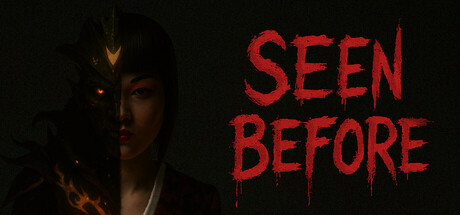
Have you ever walked into a room you’ve been in hundreds of times before and felt something is off? That lamp on your nightstand seems slightly shifted, or that nail in the wall is higher than you remember. You try to recall what the room looked like before, but the emerging doubt leads you to question your own sanity. Usually there’s a reasonable explanation, but that feeling of dread and uncertainty that lingers is chilling to the bone. What if something has changed? And if so, you didn’t do it… so who did? Developer Depth in Vision’s new game, Seen Before published by Shelter Game Hub, captures this exact horror to deliver a thrilling escape room experience.
Seen Before – Demo Gameplay
Seen Before isn’t your typical escape room game. It’s a “spot the difference” game with psychological horror elements in which changes between environments are subtle and dynamic. Levels are small, explorable rooms. You pass through iterations of the same room and have to identify if anything has changed. Sometimes certain objects have been moved, and sometimes the room changes as you play. The game is divided into independent levels called chapters. Chapter 1, titled “Tension at the Noodle Shop”, is available to play in the demo.
Enter the Noodle Shop

Chapter 1 begins with elevator doors opening up to a quiet noodle shop with a small bar, kitchen, and dining area. The number 0 drawn on a chalkboard sign indicates this room is the initial stage and normal version of the noodle shop. Your task is to familiarize yourself with the environment. Note the placement of the furniture, grasp the layout of the room, and carefully study the wall decor. You can take as much as you’d like here before entering the elevator again to start the game. When the doors reopen, you’ll be in the next stage as indicated by the increasing numbers on the chalkboard sign.

Your tasks and instructions are outlined in your journal. If the room is the same as stage 0, step into the “no anomaly” elevator marked by the angel wings. If the room is different, choose the “anomaly” elevator marked by the skull. Find and collect all the matryoshka dolls hidden throughout the stages to complete the chapter. Entering the wrong elevator resets your progression back to stage 0.
Seen Before keeps the room just busy enough to challenge your memory without feeling too overwhelming. The map size is small and contained, and objects are placed in a simplistic manner. The game doesn’t trick you by changing the finer details, like small utensils and bottles.
I’ve Seen This Before…

A bell dings and the doors open up again. You’re back in the noodle shop, and everything seems… fine? The furniture is in place, two women are conversing by the bar, a man sits in the back enjoying his noodle bowl, and another man smokes his cigarette by the creepy painting. It’s just like you remember it, you were just here a few seconds ago.
Something is Terribly Wrong…

The bell dings again, the doors open and you’re back in the noodle shop. You run through a mental checklist. Bowls in place? Yes. Creepy paintings still creepy? Yup. You glance at the two women talking and a shiver chills your spine. The woman with her back turned is staring at you, her head rotated a complete 180 degrees and still smiling. In fact, everyone is staring at you no matter where you move. Suddenly, binaural whispers echo between your ears as your vision distorts. The message is clear: run. You sprint to the anomaly elevator, and as the door closes all eyes remain on you until the last moment.
Differences between stages in Seen Before are not just visual. Chapter 1 features 35 possible anomalies, ranging from shifted object placements and variation in decor to strange customer behavior and haunted kitchenware. The game cycles through these to maintain an anxious level of uncertainty. Every time the elevator doors open, you’re not sure what you’ll see.
Seen Before Turns Familiarity into Fear

Seen Before makes my skin crawl. It does a fantastic job of cultivating uncertainty through familiarity. The more you play, the more comfortable you get with your surroundings. When something inevitably changes, that contrast against the familiar really amplifies feelings of uncertainty and dread. There’s something just so uncanny, uncomfortable, and paranoia-inducing about realizing a familiar place has been changed.
Initially the psychological horror elements caught me completely off guard because I was hyper fixated on identifying changes. I was holding my breath every time the elevator doors opened after my first anomaly encounter. The scariest moment was when I noticed the painting of the demonic creature was empty. I immediately bee-lined for the elevator because I didn’t want to stick around to find out if Depth in Vision had coded the creature into the game. Nothing happened, but the looming threat was enough to push me to the edge of my seat. That being said, the jump scares were the weakest element of Seen Before. The sudden cuts to scary faces and loud noises were ineffective and cheap compared to the well implemented, eerie atmosphere.
Seen Before Needs More Gameplay
Repetitiveness and Lack of Replayability
Although finding anomalies in a creepy room was thrilling, I wasn’t motivated to replay Seen Before. While the demo cycles through a large and diverse group of anomalies to keep each playthrough fresh, it fails to reduce the repetitiveness of the game loop. By the time you’re 10 minutes into the chapter, the room becomes so familiar that the challenge of finding differences disappears. The creepy atmosphere also becomes stagnant. There’s no real threat to the player from any of the anomalies, so there’s nothing to really worry about apart from the occasional scare. In my initial playthrough, I saw 15 out of the 35 possible anomalies, but didn’t strongly feel like replaying the chapter just to see everything I missed.
Change the Routine
Seen Before felt like a walking simulator through a museum diorama, and left me wanting more. I’d like to see the anomalies change the gameplay itself instead of just the room. Perhaps some anomalies make player vision go black-and-white to hinder color based memorization. Or player vision could be reversed so the room appears mirrored. This mechanic already exists in the game as an anomaly, but isn’t explored any further. These kinds of factors would make the core game loop more interesting while adding extra challenge. Additionally, I found myself spending less and less time in each stage because I had perfected my mental checklist to find anomalies. The game never pushed me to reconsider my approach, so at one point I was running through each stage within 15 seconds or less with enough accuracy to pass.
For future chapters I’d like to see more complex rooms and unique transitions between stages. We Went Back is another psychological horror game with a similar mechanic of repeating familiar rooms with anomalous changes. The game takes place on a circular moon base and has the player move through a single hallway connecting all the rooms. Every time you complete a loop, the rooms slightly change on the next cycle. In this regard, Seen Before could take inspiration from We Went Back to make transitions between stages smoother and perhaps extend each level beyond a single contained room.
Final Thoughts

Seen Before’s demo effectively uses uncertainty to make you feel uncomfortable. The challenge of finding differences in the environment is well balanced and digestible. As it stands, Seen Before is worth playing for a new experience, but falls off after spending a short amount of time mastering the levels. As development continues, adding additional gameplay mechanics to break up the repetitiveness will serve it well in establishing itself as an innovative blend between the “spot the difference”, escape room, and psychological horror genres.
Seen Before’s demo is part of Steam Next Fest: June 2025. The game will enter Early Access on Steam in July 2025. Retail price has not been set at this time.
Leave a Reply