
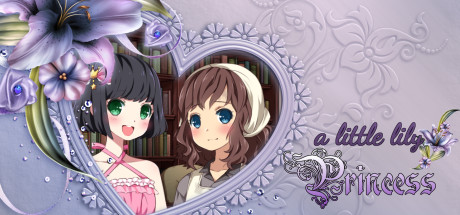
A Little Lily Princess
Pros
Amazing Visuals
Fun Minigame
Seperate Character Events
Cons
Poor Replayability
No Trigger Warnings
Choices Don't Truly Matter
Reviewer’s Note: Be forewarned the game about to be reviewed contains material that may be disturbing to some gamers. The following are the potential triggers associated with this game; child abuse, parent death, bullying, and hinted suicidal thinking. Play at your own discretion.
The Visual Novel Niche
Visual novels are a very peculiar niche in the gaming genre. Combining graphic novels and gaming something that shouldn’t work on paper but is loved by so many all the same. In part due to the rise in popularity and abundance of dating sims. Those sorts of games are what intentionally got me into visual novels, with the release of Date with Death by Two and a Half Games Studio spearheading my love for the genre.
But dating sims aren’t the only subgenres available to visual novel audiences, for it’s also packed with choose-your-own-adventure titles. A Little Lily Princess, by Hanabira and published by Hanako Games, is a combination of the two, leaning more heavily on the latter with only a good sprinkling of romance throughout, depending on the route you decide to take. All the better since the eldest child is a mere fourteen years of age. Actively partaking in more typical romantic activities is less than appealing.
It’s the choose-your-own-adventure aspect mixed with the Victorian aesthetic that got me to initially pick up this title. As I am an avid reader with a love of interactive fiction, and a passion for history. So, for me, such a combination is like liquid gold.
A Peek into the Fairytale
Our story begins with Sara, an eleven-or twelve-year-old girl being forced to depart from her father in order to receive proper schooling in an English Seminary. The reasoning behind this? Her father resides in India, a place where it’s thought that a young lady couldn’t hope to achieve proper education. For an entire year she must do her best to study hard and make friends while only being able to communicate with her father through letters.
If you have read The Little Princess by Francess Hodgson Bernett, this setup might sound familiar, and that’s because A Little Lily Princess was based on the classic novel. Fans of the old childhood tale might find this visual novel an even sweeter treat. Though I can’t say for certain how faithful it’s to the original tale, as I played the game without reading the novel. So, I’ll refrain from delving further into the connection, but I highly encourage you to seek out both for yourself.
The Victorian London Aesthetic

Ah, good old Victorian London. An often-romanticized portion of English history with ballgowns, higher class drama, and romance taking center stage, and the less dazzling reality of the poorer class often getting swept under the rug. A Little Lily Princess takes that rug and beats it out for all to see.
Not only do we get to see the magnificent churches, and a flower garden, but also the rainy weather and gloomy streets. The game always matches the mood of the scene. In the more hopeful Act One, despite the mean-spirited Lavinia bullying Sara and the rest of the cast, things are looking up. We get to see scenes like a dinosaur exhibit, and Sara dressed up in pink for her birthday.
The moment Act Two begins, all hope seems lost. Gone is the beauty, replaced by the dreary rainy days, and only a black frock for dear Sara to wear as she’s tossed into poverty. It forces the all too cruel reality of peasant life to the surface, a thing I think more games could benefit from as it makes them seem ever more realistic.
Replayability
As discussed previously, one of the more alluring aspects of the visual novel is the ability to choose how the story plays out. This, in turn, strengthen the likelihood that the gamer will return to it if anything just for the sheer curiosity of it all. A Little Lily Princess achieves this by allowing the players to choose what activities Sara participates in. They are the deciding factor of what character events the player can choose to see. Placing one as an active participant or risk missing out on crucial events is a rather clever way to ensure that the gamer stays interested in completing the mini games.

However, at least in my experience, the change of the weekend scenes according to what character you decide to prioritize your schedule to did little to motivate me to replay the game. Besides the weekend events, the rest of the game stays exactly the same with the characters behaving just as they would if you weren’t prioritizing interactions with them. Something that seemed unbelievable at best and irritating at worst. So, the primarily motivating factor to do each route for me was the longing to give each character a happy ending.
The Lavana Problem
But does every character deserve a happy ending?

That was the question I was forced to ask myself when doing the Lavana ending, an ending you have to complete if you wish to unlock the bonus gallery. Throughout the whole entire game including her character events, she acted with either a “better than thou” complex or a complete bully. Going out of her way to belittle everyone including her best friend and was more often than not the reason that in Act Two Sara is punished by means of starvation for a day and night. With no real redeeming quality to be found, her motive at its core is raging jealously, making even a misunderstood argument fall flat on its face.
That’s not to say the character events weren’t enjoyable. On the contrary, seeing Lottie, the youngest of the girls change from being spoiled to trying to help and care about others through the course of her events was rather heartwarming. For those who don’t mind their choices not bearing weight on the game as a whole. I could see them really enjoying replaying the game multiple times over just to collect all the hidden lore. I’m just not that type.
Final Thoughts
A Little Lily Princess is at its core a passion project, made out of love and admiration of a classic book. Seemingly in hopes of sharing the story with a newer generation who prior to stumbling upon the game might not have heard of it. So, despite any grievance with the game itself, they have my respect. If you like visual novels set in a Victorian Seminary and won’t be put off by the lack of choice influence, then I highly suggest giving this game a try. Who knows? You might end up feeling like there’s a princess inside of you too.
Leave a Reply