
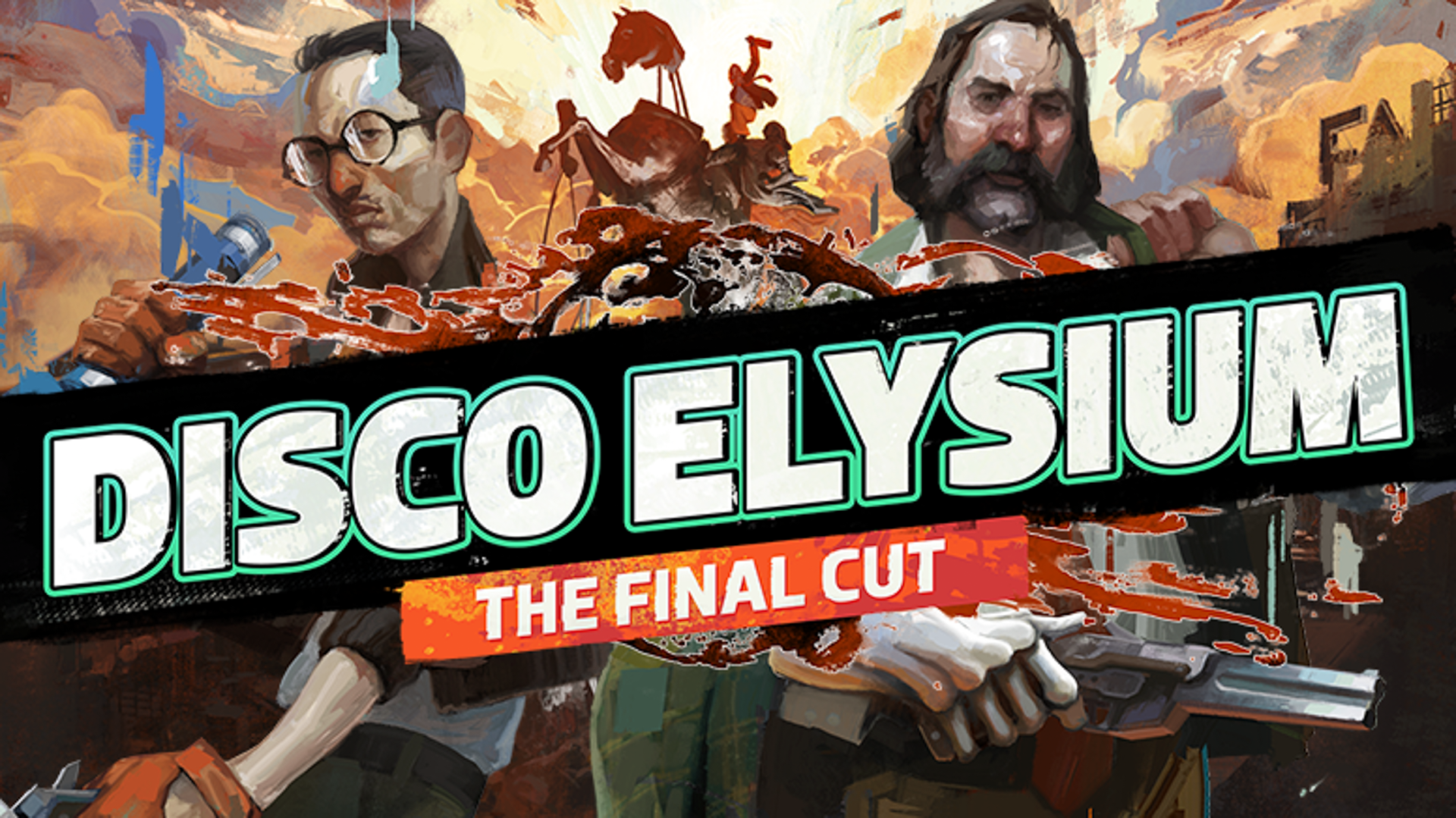
The world of ZA/UM’s Disco Elysium is as disorienting and cold as it is an inviting marvel. The music takes us through waves of despair, hope, and even through the rave scene, should we choose to explore it. The muted color palettes cast a somber tone, but vibrance can be found in certain corners of the district. The cast of characters range from dispassionate to nurturing to downright hostile.


All of this comes to us through the cop-turned-amnesiac assigned to a murder case shrouded in contention. He must find his culprit before the community tears itself apart, a feat even for the mentally sound man. But Harry Du Bois will have to reorient himself with the reality of his environment, and more dauntingly, the reality of himself.
After waking up in a trashed hotel room in Martinaise, Harry discovers that his days-long bender wiped his mind. Thoroughly wiped it. The doesn’t-know-his-name, doesn’t-recognize-his-face variety of mind wiping.
And he can’t figure out why his face is contorted with a permanent smirk. As far as he and his internal guides/tormentors can tell, he has nothing to smirk about. He will learn that the same is true for all of Martinaise, a nearly autonomous district at odds with itself and with the Revachol Zone of Control.
Time to Get a *Reality Lowdown*


Compose each slide from any blocks.

Mix images, text, buttons and more.

Each group becomes one slide.
There’s a lot to unpack with the lore of Martinaise. To shed some light, a bit of background on the Estonian development team. The ZA/UM “cultural movement” unofficially broke ground on Disco Elysium long before its video game phase. The team’s formation was, fittingly, driven by casual Dungeons and Dragons sessions and their blog, dubbed the “flagship product of the movement.”
As post-Soviet Estonians, core founders Robert Kurvitz, Alekzander Rostov, and Argo Tuulic, combated their societal discontent with creativity. “If you’re a creative person,” says Rostov, “you find your ‘gang’ and then you form a gang and then you commit art hooliganism against society.”
And commit they did, at first, for the enjoyment of storytelling, on their blog, with essays and comedic skits, paintings, photographs, and the like. D&D campaigns were inspired by media like The Shield, Planescape: Torment, Lord of the Flies, and plenty of others.
But eventually pieces came and stuck together, compounding over the span of three D&D campaigns with years between them. The intent was not to model the world of Revachol on their own environment. But, as Tuulic aptly observes, when building a world of fiction, “you can’t really scrape [your home’s history] off, even if you wanted to.” Thus, real-life influences and introspections started creeping in as themes, like ID and Ego, economic strife, power struggles, and ideologies.
…Because Art Imitates Life
Much of that can be traced back to Estonian history. Capital and economic hub, Tallinn, saw its share of struggles for control due to the trade opportunities at its port. It wasn’t until 1991 that Estonia claimed its independence from the Soviet Union and a new kind of struggle emerged. This same struggle plays out in Disco Elysium.


A community pulled from this governance to that struggle: from a communism to neo-liberalism, from one identity to another. One that faces the power void’s symptoms of crime and violence. One comprised of individuals who are granted (or confronted with) a newfound freedom. To Kurvitz, “being lost in history, having lost your planetary homeland” is what Disco Elysium explores via the citizens of Revachol.
As players, we can choose to gloss over much of the history that informs Martinaise’s societal climate, but its marks are seen everywhere. The architecture is pockmarked by gunfire and cannonball blasts. A grumbling uniformed veteran divulges his war stories exhaustively if given half a chance. A Horseback Monument of Revachol’s most wasteful king resides in its most poverty-stricken district.
No matter the extent of lore the player chooses to indulge in, Revachol’s history directly impacts Harry’s investigation. The overarching power struggle in Martinaise blocks him at nearly ever turn. Most notably, this thread leads to Harry himself, a man without any knowledge of a home or a history of his own.
Time to Embrace the Whimsy
Fortunately for him, and for us, he is aided by the ever-calming assurances of Kim Kitsuragi. Unfortunately for Kim, he works alongside a partner obsessed with “Copotypes” (personalities) and side quests that can significantly sidetrack the case (if that’s the player’s inclination). These tasty bits of the game provide a much-needed contrast to the foreboding, moody overtones the case brings, and I’m glad to have them.
…of Multiple Personalities

Visualize, intuit, barrel through obstacles. There’s no wrong strategy here (gameplay capture) 
Level up. Let your skills guide the narrative (game play capture) 
Sleep on a park bench. Be among the people. Save that *real* for fun things like thrifted outfits and health-boosters (gameplay capture) 
*Savoir Faire* is Superstar Cop’s greatest skill (gameplay capture) 
Dazzle the district, Karaoke Cop (gameplay capture)
Of the various copotypes Harry can explore and adopt, it is unclear which brings the most grief to Kim. Sorry Cop is a good way to amplify Harry’s already depressive mentality, forcing Kim to handhold and therapize. But let’s not dwell on that. If the aim is to mix things up, one of the most interesting personalities to try on is Superstar Cop.
Superstar Cop is full of yet unearned confidence. Some say Superstar Cop is delusional. But above all Superstar Cop parties like only an amnesiac cop called Tequila Sunset could. He wears a permanent smirk, introduced in the first moments of the game as *The Expression*. He obsesses over disco. Perhaps he rocks the karaoke mic with his sad, sad song or he might pave the way for a hard-core-to-the-mega nightclub in a mysterious abandoned church. If he’s Superstar enough, the true meaning of *Disco Elysium* may come to light. One thing is certain: Superstar Cop is brimming with *Savoir Faire* and ready for that disco life.
…and the Supranatural
Possibly the most gratifying of side quests pays out for players who fancy themselves true believers. For those with unceasing curiosity, the pseudoscientific path awaits.
On day one, Harry can (and should) strike up a conversation with a kindly woman called Lena. She is one of few who offers unyielding patience and sympathy for Harry’s discombobulation. Even if the player triggers the unfortunate incident causing Harry to crash into and knock over her wheelchair, Lena takes a liking to him. Talk about a meet cute.


What an Expedition
A few days into the investigation, she presents an enticing peek into the supranatural. She divulges to Harry that she’s anxiously waiting for her husband, Morell the Cryptozoologist, to return from his trek across the “mysteriously” downed water lock. He is on a case of his own there, setting traps around the peninsula for a cryptid called the Insulindian phasmid.
Despite Kim’s clear desire to avoid a detour from the case, players might opt for Harry to latch on to the mystery of it all and get a cryptid crash course from Lena. Knowing Harry well enough at this point, Kim will set a strict one question limit, which Harry can promptly disregard. And as Lena nears the extent of her cryptid insights, even Kim’s curiosity is piqued enough to participate in the conversation, if only to debunk what Harry has already accepted as gospel.


But if the player leads Harry down this path, he will be certain of one thing above all else: the Insulindian phasmid is central to the case. Whether by appeasement or a hidden desire to be proven wrong, Kim will resign himself to his fate of running laps and setting traps around the peninsula to help bring Morell back to Lena. He will even go as far as admitting to hopes of seeing something.
As a result of all this effort, the final chapter of the game may bring satisfaction, just when many are likely to have let go of the “supra” in supranatural. For Kim, the possibility of experiencing something that opposes his world view. For Harry, a potentially life-affirming connection. As for the player, perhaps a message from the developers about the pursuits that make reality’s hardships worthwhile.
Time to Wrap Up the Case
These are just two of Disco Elysium’s many charming possibilities; so many, in fact, that after several playthroughs it’s entirely possible to have missed more of them. This is why replaying the game is so enticing. The case’s conclusion may not be novel the next time, but the road to it presents a variety of decisions, discoveries, and connections that shape Harry in novel ways.
Because of its replayability and other shining qualities not previously noted (honorable mention: the incredible voice acting), Disco Elysium is a world worth revisiting often. Especially for those of us eagerly awaiting the next title from some of the creators have unfortunately moved on from ZA/UM, which deserves a space of its own.
Until then, Elysium holds a space for all.

Disco Elysium released in October 2019 on PC. It won multiple awards, including BAFTAs before being re-released as The Final Cut on PC, Mac and consoles, in 2021.
Leave a Reply